
The Indian Matcha Revolution: Why Assam’s Historic Brew Is About to Change Your Office Pantry
Assam matcha tea just made Indian tea history. On July 3, 2026, something happened in a tea estate in Tinsukia, Assam, that most people outside the tea industry will never hear about, but it is going to quietly change what lands in office pantries across India over the next few years. Chota Tingrai Tea Estate sold India’s first ever commercially produced batch of Japanese style matcha at the Guwahati Tea Auction Centre. Five kilograms. Rs 3,000 per kilogram. Bought by a Guwahati based buyer called Sheosons Chai Co. It sounds like a small transaction. It is actually the opening of a door that Indian offices, cafes, and beverage brands have been waiting years for.
Why assam matcha tea matters more than it sounds
Until this month, if your office wanted to serve Assam matcha tea, that matcha was coming from Japan, China, or Vietnam instead. Matcha has exploded worldwide over the last few years, especially among younger professionals looking for steady focus without the jittery crash that comes with too much coffee. But that global demand has hit a wall. Japan’s premium tencha, the shade grown leaf that gets stone ground into matcha, has seen production drop, and prices on the Japanese auction floor have climbed to levels that make it a genuinely expensive import for Indian businesses.
Chota Tingrai spent nearly ten years working with Japanese tea experts to solve this. They built a fully automated Japanese style processing facility right on the estate in Tinsukia. The result is authentic matcha, grown and processed on Indian soil, with a domestic supply chain that does not depend on shipping delays or import costs.
For any Indian business that wanted to offer real matcha but balked at the price or the logistics, this changes the math.
What actually makes matcha different
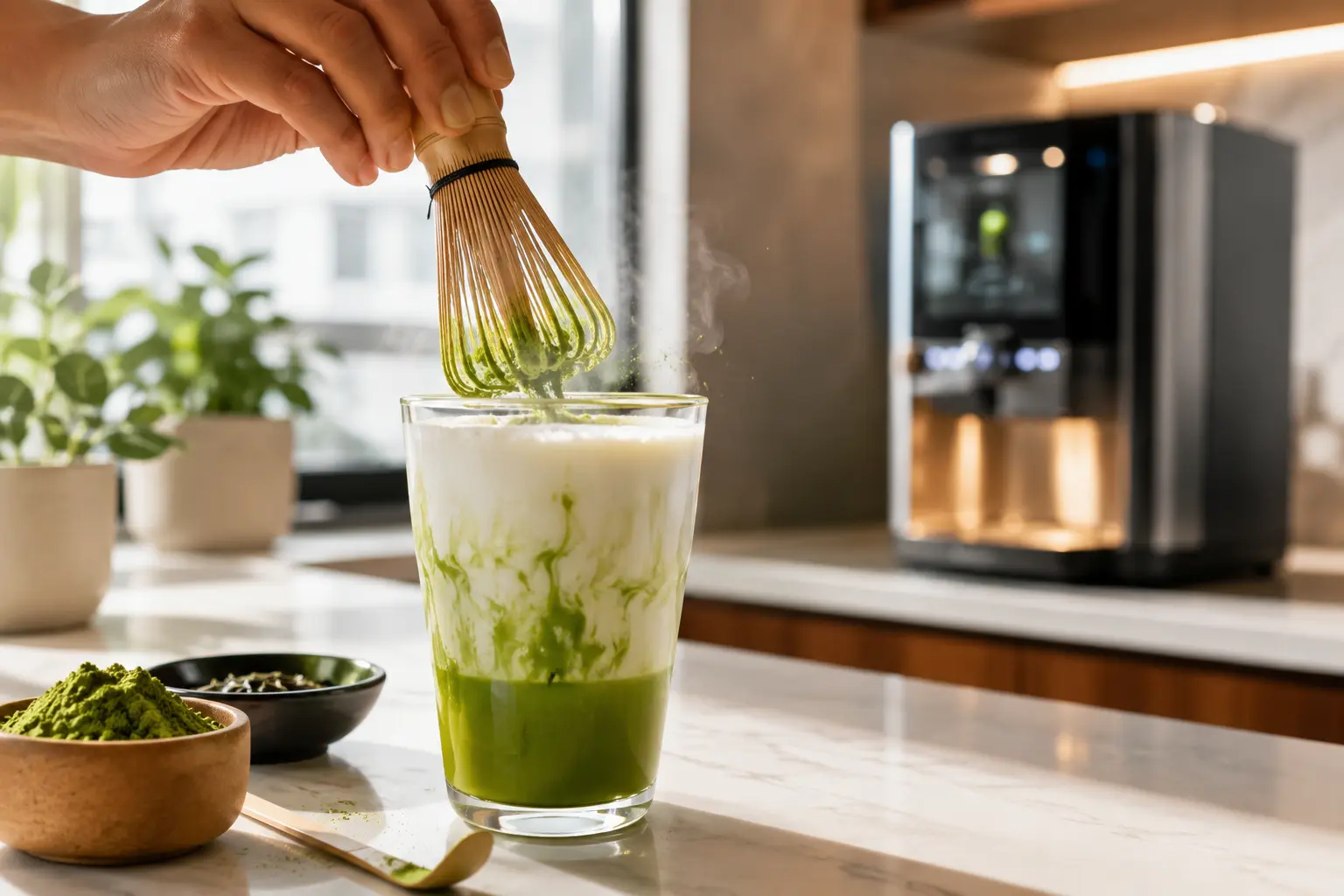
Matcha is not just green tea in powder form. About three weeks before harvest, the tea plants are covered with shade cloths that block up to 90 percent of sunlight. This stresses the plant into producing far more chlorophyll and a compound called L theanine, which is what gives matcha its calm, steady energy instead of the sharp spike and crash you get from regular coffee. The leaves are steamed right after harvest to stop oxidation, then dried and stone ground into the fine bright green powder people recognise. This is what sets Assam matcha tea apart from ordinary green tea powder.
This is also why matcha appeals so strongly to a specific kind of office drinker. It delivers sustained focus without anxiety, which is exactly what a lot of Gen Z and millennial employees say they are looking for when they say they want to cut back on coffee.
The next step: hojicha
Once matcha production scales domestically, the natural next step is hojicha, a roasted green tea with a nutty, caramel like flavour and a much lower caffeine content than matcha. Hojicha works well later in the day, for employees who want something warm and flavourful in the afternoon without the caffeine that keeps them up at night. Together, matcha in the morning and hojicha in the afternoon give offices a complete, low crash beverage option that did not really exist as an affordable domestic product before this year.Once matcha production scales domestically, the natural next step is hojicha, a roasted green tea with a nutty, caramel like flavour and a much lower caffeine content than matcha. Hojicha works well later in the day, for employees who want something warm and flavourful in the afternoon without the caffeine that keeps them up at night. Together, matcha in the morning and hojicha in the afternoon give offices a complete, low crash beverage option that did not really exist as an affordable domestic product before this year.
What this means for your office pantry
Most Indian corporate pantries are still built around two options, tea and coffee, both usually manual, both usually inconsistent depending on who is making them that day.As domestic matcha becomes more available and more affordable, offering it stops being a novelty and starts being a realistic upgrade, the same way oat milk or cold brew became standard rather than exotic within a few years of being introduced.The challenge is serving it properly. Matcha is sensitive to heat. Boil it the way you would boil regular tea and you lose the delicate flavour and the antioxidant content that make it worth serving in the first place. This is where the delivery mechanism matters as much as the tea itself.
Hotcups’ machines are built to dispense beverages at precise, consistent temperatures, which matters for a drink like matcha that loses its flavour and antioxidant value if it is over-boiled. As specialty options like matcha and hojicha become more accessible in India, that kind of temperature control is exactly what makes offering them at scale, without a barista and without guesswork, realistic for a busy office pantry.
Conclusion
What happened in Tinsukia this month is small in scale but big in direction. India now has its own Assam matcha tea supply chain for the first time, which means the beverage that used to be an expensive import is on its way to becoming something ordinary offices can realistically offer their teams. The businesses that move early on this, before matcha becomes the default expectation the way oat milk or cold brew did, get to look ahead of the curve rather than catching up to it later.
As trends like matcha and hojicha continue to shape what employees expect from their office beverages, having the right vending infrastructure in place matters more than ever. Explore our range of tea and coffee vending machines to see how Hotcups helps businesses stay ready for what their workforce wants next.